
 ©PA
©PA
In just three words, "no to war", Pedro Sánchez has drawn a political line: the one beyond which a state decides not to participate in a military operation it deems illegitimate, even if the request comes from its most powerful ally.
The refusal to allow the United States to use the bases at Rota and Morón, in Andalusia, to strike Iran, provoked a reaction from Donald Trump who accused Madrid of being a "terrible partner" and threatened to cut off trade with Spain. The reply from Pedro Sanchez, the head of the Spanish government, was clear: Spain will not be "complicit for fear of reprisals".
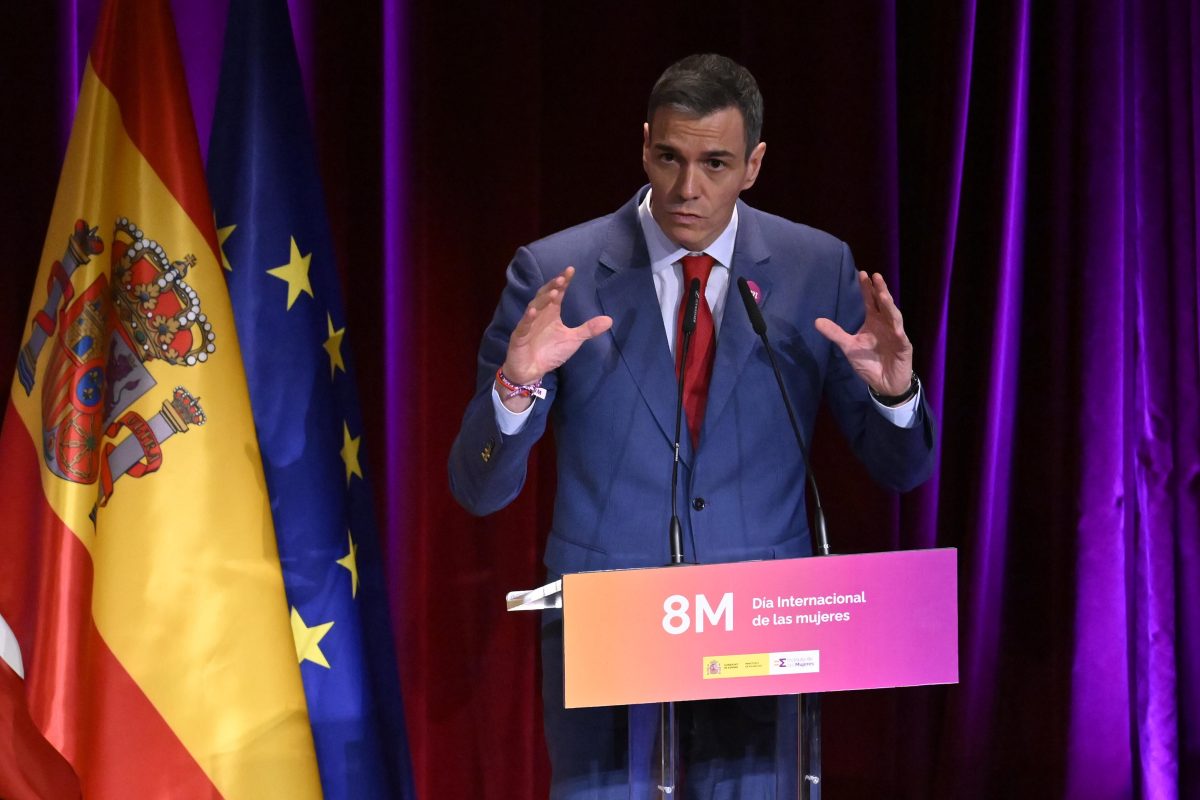
In his institutional speech on March 4, Sánchez reaffirmed a principle: you can't respond to one illegality with another illegality. The reference was to the attacks that set the Middle East ablaze after the American and Israeli raid on Iran and Teheran's response.
The head of government referred to a specific precedent: the 2003 Iraq war. At the time, the Bush administration, with the support of London and Madrid, justified the intervention on the grounds of the existence of weapons of mass destruction, which were never found. Years later, the British "Chilcot Report" documented errors of assessment and destabilizing consequences: jihadist terrorism, migratory crises in the eastern Mediterranean, high volatility in energy markets.
Sánchez warned against repeating this trajectory. Some 20% to 25% of the world's oil and gas transits through the Strait of Hormuz, according to the International Energy Agency. A prolonged war in this zone would mean higher prices, financial instability and increased pressure on European households and businesses.
Madrid's decision does not mean leaving the Atlantic framework. Spain remains a member of NATO and the European Union. But, as the head of government sees it, membership of an alliance does not cancel out national political responsibility.
The European Commission has expressed its "full solidarity" with Madrid and its readiness to defend common interests in the event of retaliatory trade measures. At this point, a shift in the meaning of the word sovereignty is taking place. It's not a matter of withdrawing into one's own identity or isolating oneself, but of being able to exercise autonomous judgment when a military choice risks compromising international law, economic stability and the safety of civilians.
Even from an environmental point of view, the stakes are far from secondary: armed conflicts have a direct impact on global energy chains, emissions and the race for fossil fuels. A war in the Gulf means more oil on the agenda, and less ecological transition.
In his speech, Sánchez evoked the dynamics that led to the outbreak of the First World War: a chain of uncontrolled reactions, miscalculations, unforeseen escalations."You can't play with the destiny of millions of people," said the head of the Spanish government, who also announced concrete measures: evacuation of Spanish citizens from the crisis zone, study of tools to protect families and businesses from possible energy shocks, coordination with European partners for a diplomatic response. In other words, preventive risk management.
Being a leader, in this context, means taking responsibility for a "no". Not out of sympathy for the Iranian regime - described as repressive and violent - but out of consistency with international law and national interest.
Perhaps the most politically significant passage is that on "complicity out of fear". For the head of government, automatically following an ally is not leadership. Loyalty is not the same as obedience. Here, sovereignty takes on a different face from that which has been polemically agitated in recent years: it;s not the rejection of Europe or multilateral institutions, but the defense of decision-making autonomy within them. It's a choice not to take part in an operation which promises stability but which, in reality, risks producing exactly the opposite: more expensive energy, more geopolitical tensions.
It's a gamble. It may have an economic cost. But it sketches out a precise idea of the government's function: to protect citizens, the economy and civil space from a conflict which, as Sánchez reminded us, is unlikely to bring higher wages, better public services or a healthier environment.
(©GreenMe.it 2026 / Managing Editor : Selma Keshkire - The Press Junction / Picture : Picture Alliance - Anadolu - Burak Akbulut)