
World
Politics
Society
Migration crisis escalates in Ceuta: Spain sends the army after sudden arrival of 40,000 refugees
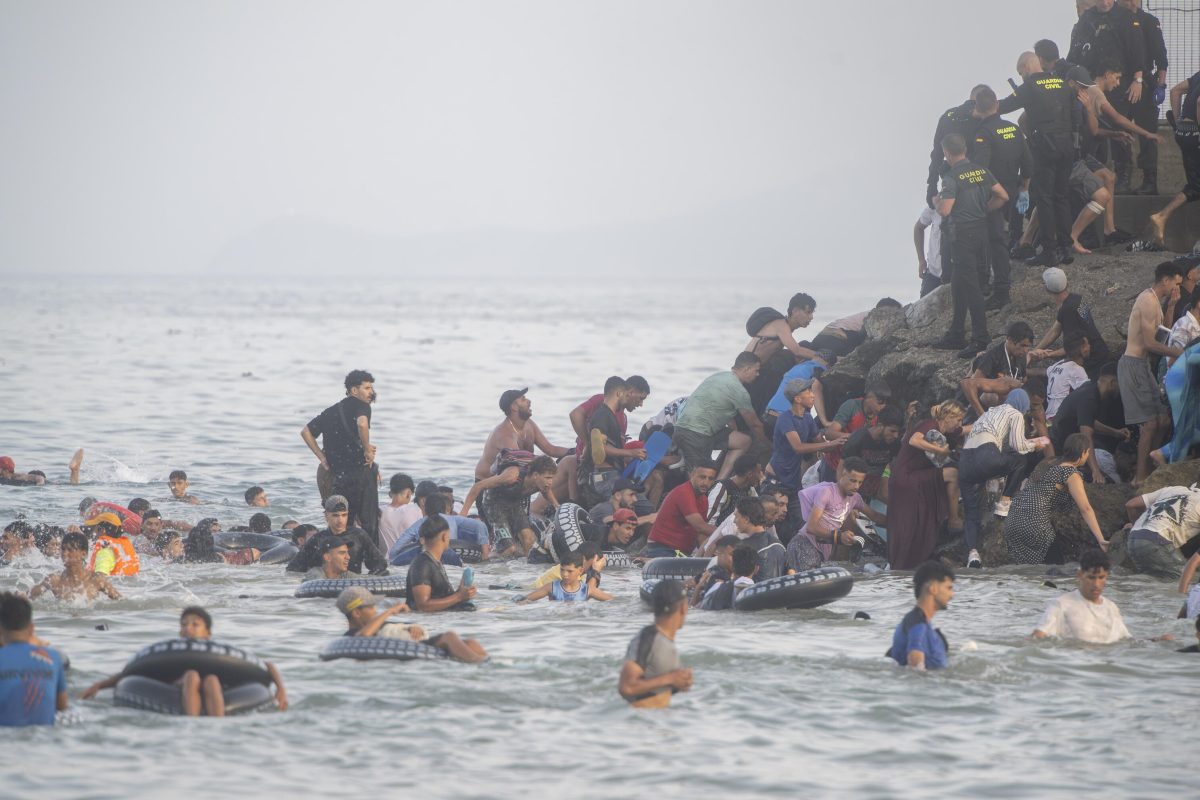
Spain is deploying troops to restore order in the North African exclave of Ceuta after thousands of migrants crossed the border from Morocco on Thursday—swimming, using rubber tubes, and partly via the land border. According to local media, at least 19 people lost their lives during the crossing. The Spanish government describes the situation as “chaotic scenes” and accuses human trafficking networks of exploiting the situation. More than 40,000 migrants are reported to have crossed the border in recent days.
The crisis began after several days of rising numbers of attempts. On Thursday, border controls appeared to have temporarily collapsed: footage showed people flooding into the sea en masse and filling Ceuta’s beaches with flotation devices. Reception centers became overcrowded, and thousands of people spent the night on the streets. Ceuta’s leader, Juan Jesús Vivas, called on Madrid to intervene immediately. Prime Minister Pedro Sánchez is visiting the enclave on Friday and promised to “restore normalcy as quickly as possible.”
The reason for the surge is unclear, but Spanish authorities point to a recent ruling by the Supreme Court. Migrants intercepted at sea while en route to Ceuta or Melilla may no longer be immediately returned to Morocco. The Ministry of the Interior says that criminal networks are exploiting this to “encourage the influx of irregular migrants.” After all, they are making a fortune from these inhumane practices.
Italy wants to temporarily expel Spain from Schengen
The consequences extend far beyond Spain. In the other exclave, Melilla, local officials reported that some 300 to 400 people crossed the border, partly through closed fences. The images from Ceuta also led to a diplomatic dispute with Italy. Prime Minister Giorgia Meloni called the situation “shocking” and said that Italy is considering “extraordinary measures,” including temporarily suspending Schengen travel with Spain. “Uncontrolled illegal migration poses a real threat to the security of Europe’s borders,” she wrote on X.
Spanish Foreign Minister José Manuel Albares called the Italian rhetoric “unacceptable” and “partisan demagoguery.” He summoned the Italian ambassador in Madrid to explain the situation. Experts point out that a Schengen suspension is legally complex and requires support from other EU countries, but political pressure is mounting.
About 100 migrants voluntarily return to Morocco
On Friday, the massive influx appeared to be subsiding. Moroccan authorities deployed water cannons at Fnideq, the border town on their side. Hundreds of migrants had already returned to Morocco, some by swimming, others via the land border. Some said Ceuta was overcrowded, with no place to sleep or food; others reported that residents were throwing stones and threatening them with weapons.
Spain and Morocco are cooperating on the return of those who entered illegally, according to the Spanish Ministry of the Interior. The enclave, with approximately 84,000 residents, has received an estimated tens of thousands of new arrivals in recent days—an influx that is once again straining relations within the EU.
©picture alliance / Anadolu | Marcos Moreno