
 ©PA
©PA
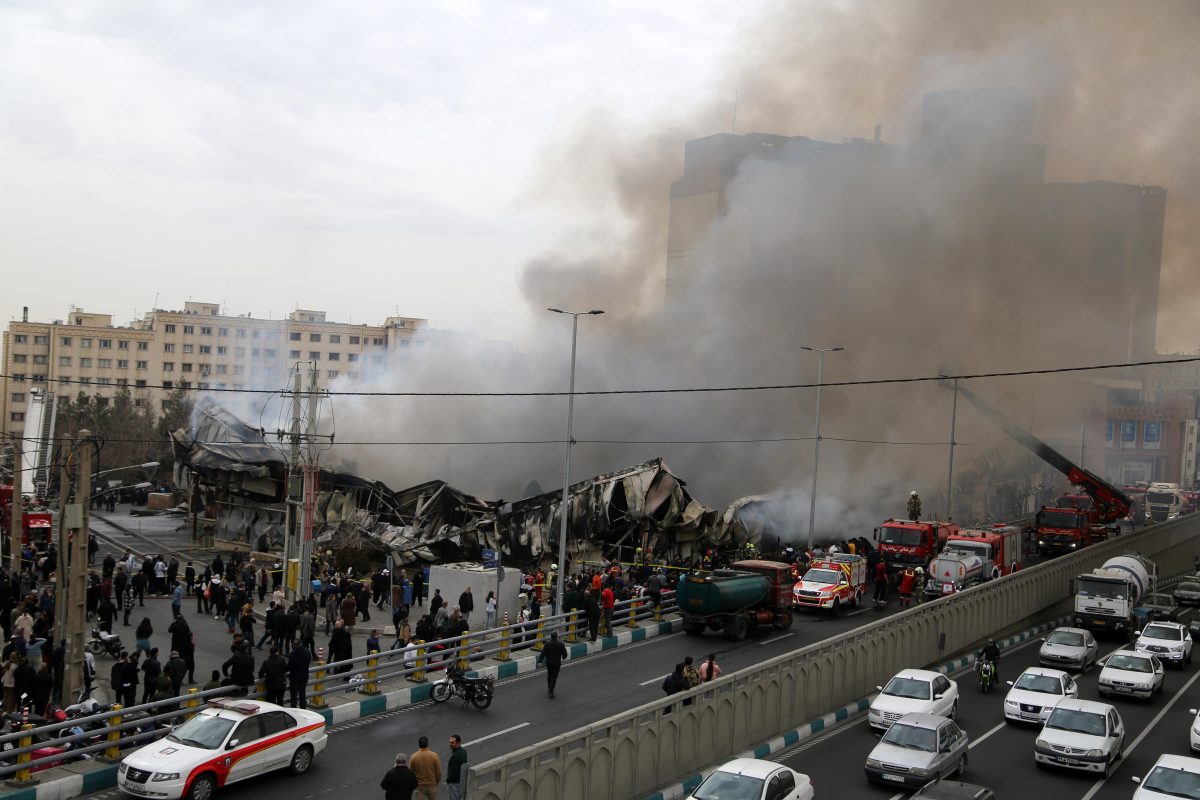
The bombing of crude oil depots in Teheran and the fire at the Bapco refinery in Bahrain have triggered an emergency situation that goes beyond the flames.
The Red Crescent - the international relief organization which, in Muslim countries, plays the same role as the Red Cross in Italy - has launched an appeal: Residents of the Iranian capital must barricade themselves in their homes because of the smoke, but also because of the imminent risk of acid rain triggered by the burning oil barrels.
"You can smell it burning. I can't see the sun anymore. The smoke is horrible. It's still there, I'm exhausted," a Teheran resident told the BBC, worried about the bombing raids carried out by Israel and the United States. The images broadcast by the media and NGOs such as Human Rights Activists in Iran show catastrophic scenes.
When a missile hits a hydrocarbon tank, the reaction is devastating for the air. Combustion releases large quantities of sulfur dioxide and nitrogen oxide. Once aloft, these gases don't dissipate: they encounter cloud moisture and react with oxygen to transform into sulfuric acid and nitric acid, as Gabriele da Silva, associate professor of chemical engineering, explained on The Conversation.
The result is rain with a pH below 7, otherwise known as acid. According to Enea studies, this phenomenon is typical of heavily industrialized areas, but the intensity of the fires of recent days has caused instant saturation. It's a threat that affects everything it touches: from the lungs of those who breathe in these toxic particles to the facades of buildings.
Unlike a bombed-out building, a territory cannot be rebuilt with peace money. If acid rain falls on fields, it dissolves essential nutrients such as magnesium and calcium, rendering soils sterile. In a region such as the Middle East, where the land is already arid, this is tantamount to condemning agriculture for years to come.
Damage to water reserves is just as serious. Acidification of lakes and rivers destroys fish life and alters the drinkability of resources. In Bahrain, where war has already hit the desalination plants needed to produce fresh water, the risk of rainfall contaminating the few remaining reserves is extremely high. We are fighting in the name of energy, but the very foundations of human survival are being destroyed.
As the price of a barrel of Brent crude topped $114 (approx. €97.9), Donald Trump declared on Truth Social that this price rise was a "small price to pay" for security. However, this calculation completely ignores the environmental and health costs. In the past, organizations such as Greenpeace and the Center for Research on Energy and Clean Air (CREA) have already shown that environmental crises caused by conflict result in high clean-up costs and public health consequences (particularly for people suffering from respiratory problems) that far exceed the economic value of the infrastructure destroyed.
The ongoing war between Iran, Israel and the United States shows that oil also burns in the air we breathe. Clouds of acid gas do not respect borders and do not stop at treaties: they are tangible proof that every bomb on a well is, in fact, an attack on our collective health.
(©GreenMe.it 2026 / Managing Editor: Selma Keshkire - The Press Junction / Picture: Picture Alliance - Anadolu - Fatemeh Bahrami)