
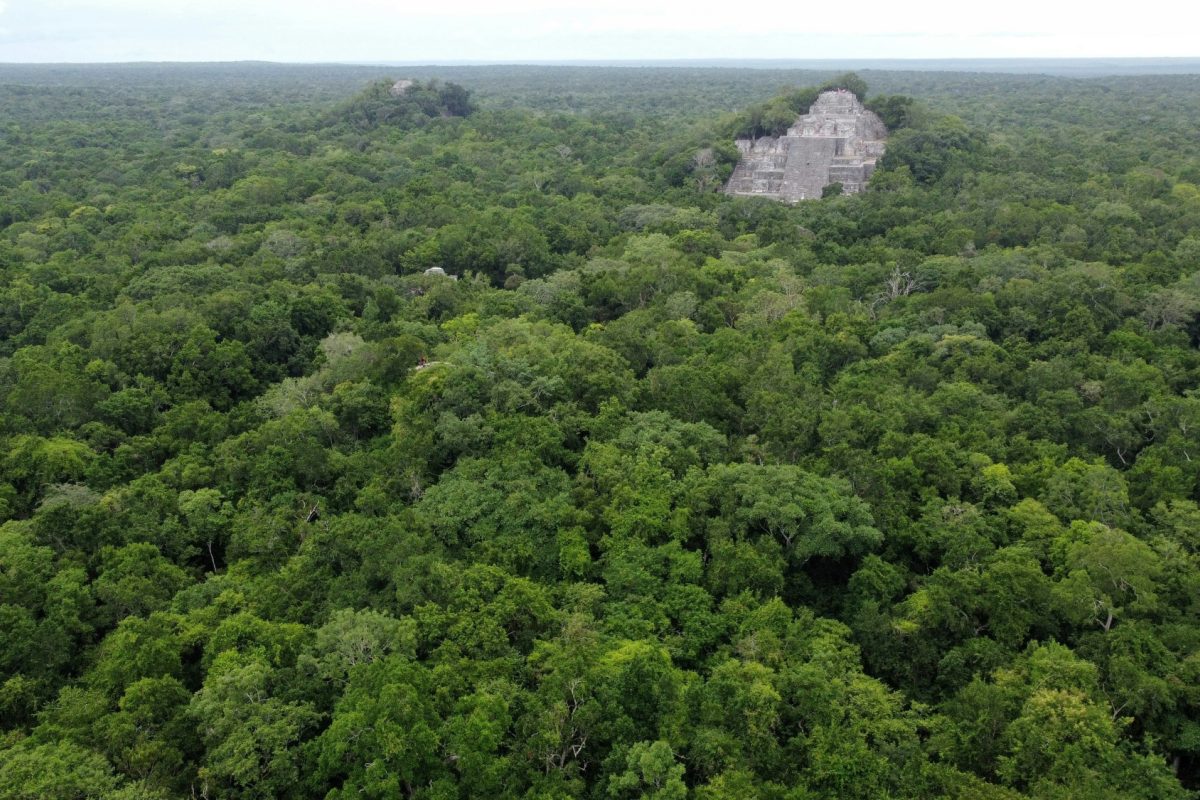
 ©Pau de Valencia via Unsplash
Guatemala has decided not to renew the oil extraction contract for an area of almost 30 square kilometers inside the Laguna del Tigre, one of the most sensitive regions of the Maya Biosphere Reserve.
The choice is clear: forgo oil to strengthen the protection of one of Central America's most important ecosystems, a haven for scarlet macaws, jaguars and hundreds of endangered species.
The Laguna del Tigre is part of a protected system of over 3,000 square kilometers, ecologically linked to Belize and Mexico, which allows Mesoamerican wildlife to move freely across national borders. It is one of the continent's most strategic biological corridors, and for this very reason, the presence of an oil field within it has always made no sense.
For years, extraction (entrusted to the Anglo-French company Perenco) was tolerated, guaranteeing significant revenues for a developing country like Guatemala. Today, the government is admitting what environmentalists and local communities have long been denouncing: the operation is no longer worth it. Between pollution, falling oil prices and increased illegal activity in the reserve, the balance sheet has become negative, both economically and environmentally.
Regaining control
The wells in the Xan oil field will therefore be shut down, and controls stepped up in an area that for years has been plundered by illegal livestock farming, logging, clandestine agriculture and illicit trafficking.
The decision marks the beginning of a process of taking back control (the ambiguous point being that it will be entrusted to the Guatemalan army) of a vast part of the country.the ambiguous point being that it will be entrusted to the Guatemalan army) of a vast part of the national territory which, for far too long, has been exploited by actors engaged in illegal activities, declared President Bernardo Arévalo.
The Laguna del Tigre is one of the most devastated areas in the entire Mayan reserve. Every year, thousands of hectares are destroyed to make way for illegal grazing and illicit crops. An ecological disaster in the spotlight.
The Ministry of Defense and the National Civil Police will occupy the area of the former oil field to coordinate operations against environmental crimes and to organize closer cooperation with Mexico and Belize (...).
A time for criticism
According to some observers, the 'green militarization' of the site risks being more a symbolic gesture than a real key to change. The reserve already has security structures, but corruption and lack of resources often render them ineffective.
The risk is that only the formal control will change, not the substance.
A political factor nevertheless weighs heavily in the balance: in recent days, a 'state of siege' has been declared in Guatemala, in response to a very complex situation. Guatemala is one of the most violent countries in Latin America, and at this very moment, criminal groups have united against the state. So, will its wonderful natural heritage be a real priority?
(©GreenMe.it 2026/Managing editor: Selma Keshkire - The Press Junction/Pic : Unsplash)