
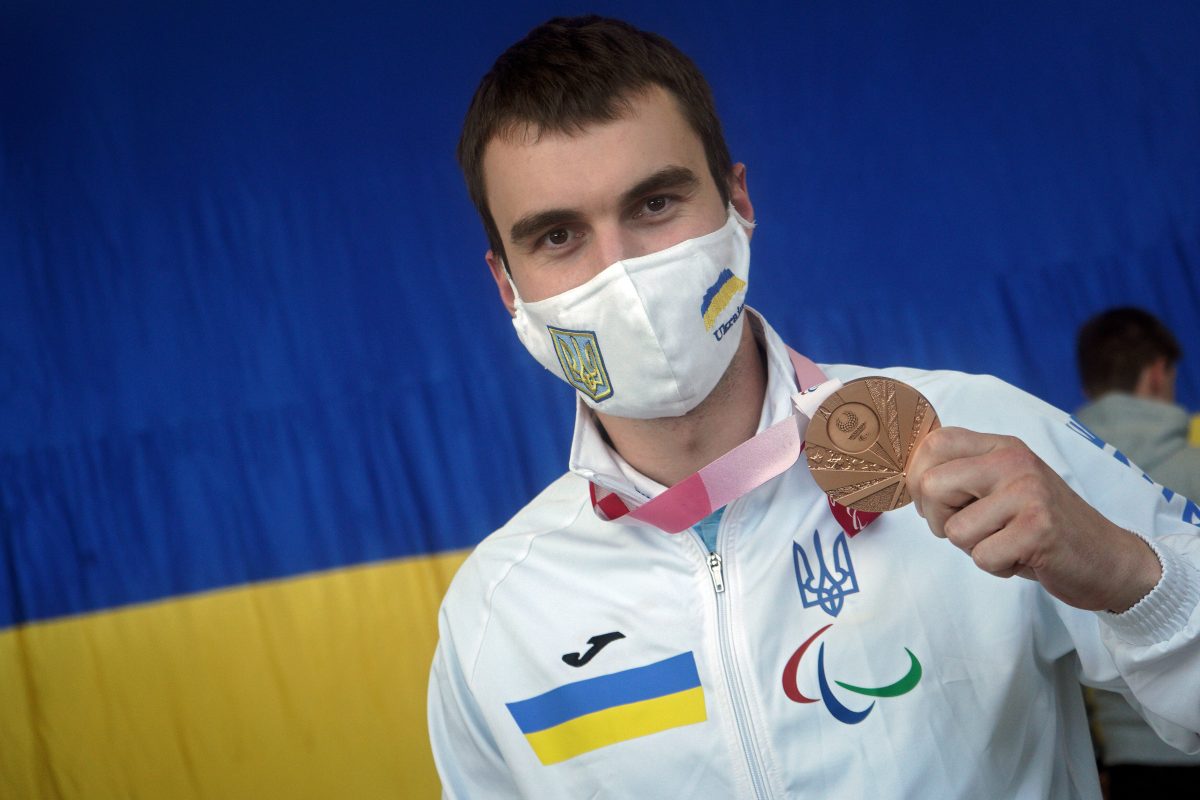
 ©picture alliance / Photoshot | -
On the eve of the Milan-Cortina 2026 Paralympic Winter Games, a new controversy involving sport and geopolitics has erupted. The Ukrainian delegation will not be able to parade in the uniform shown on social media networks, as it features a map of Ukraine, including Crimea and the Donbass, on its chest.
The decision was taken by the International Paralympic Committee (IPC), which ruled that the visual did not comply with the regulations. According to the international body, the representation of the national territory is one of the prohibited elements, as it could potentially be interpreted as a political message or one linked to national identity.
The principle of neutrality and a reminder of the rules
The rules governing athletes' clothing prohibit anthem lyrics, slogans, words of encouragement and symbols likely to be considered divisive. According to the IPC, this category also includes a cartographic representation of a country. The guiding principle is clear: to preserve the neutrality of the competition, and prevent the sports field from becoming a platform for political demands. The choice rekindles tensions that have been simmering since the Russian invasion of 2022, and highlights the delicate balance between freedom of expression and sporting regulations.
Kiev's reaction
The response from the President of the Ukrainian Paralympic Committee, Valeriy Sushkevych, was scathing. For the leader, banning this outfit is tantamount to preventing Ukraine from presenting itself as a state in its territorial integrity, free from any occupation. His words turn a "point of settlement" into a new chapter in the political confrontation that is running through the world of international sport. For Kiev, the card is not propaganda, but the expression of an identity. For the IPC, on the other hand, it remains a symbol not allowed on the field of competition. Two irreconcilable interpretations that clash just a few days before the start of the Games.
Vladyslav Heraskevych's Olympic precedent
This is not the first incident involving Ukraine at the Milan-Cortina Games. At the Winter Olympics, skeleton athlete Vladyslav Heraskevych was forced to give up a helmet bearing the faces of athletes and coaches killed during the war. Once again, the International Olympic Committee intervened, pointing out the ban on political expression and propaganda. The athlete was subsequently disqualified. Two distinct episodes, but the same fundamental question: where does sporting neutrality end and the right to represent one's own history begin?
(©GreenMe.it 2026/Managing editor : Julie Morgan - The Press Junction/Picture : picture alliance / Photoshot | -)