
World
Society
Economy
No more fast-growing chickens: Norway's poultry industry changes course (and this is just the beginning)
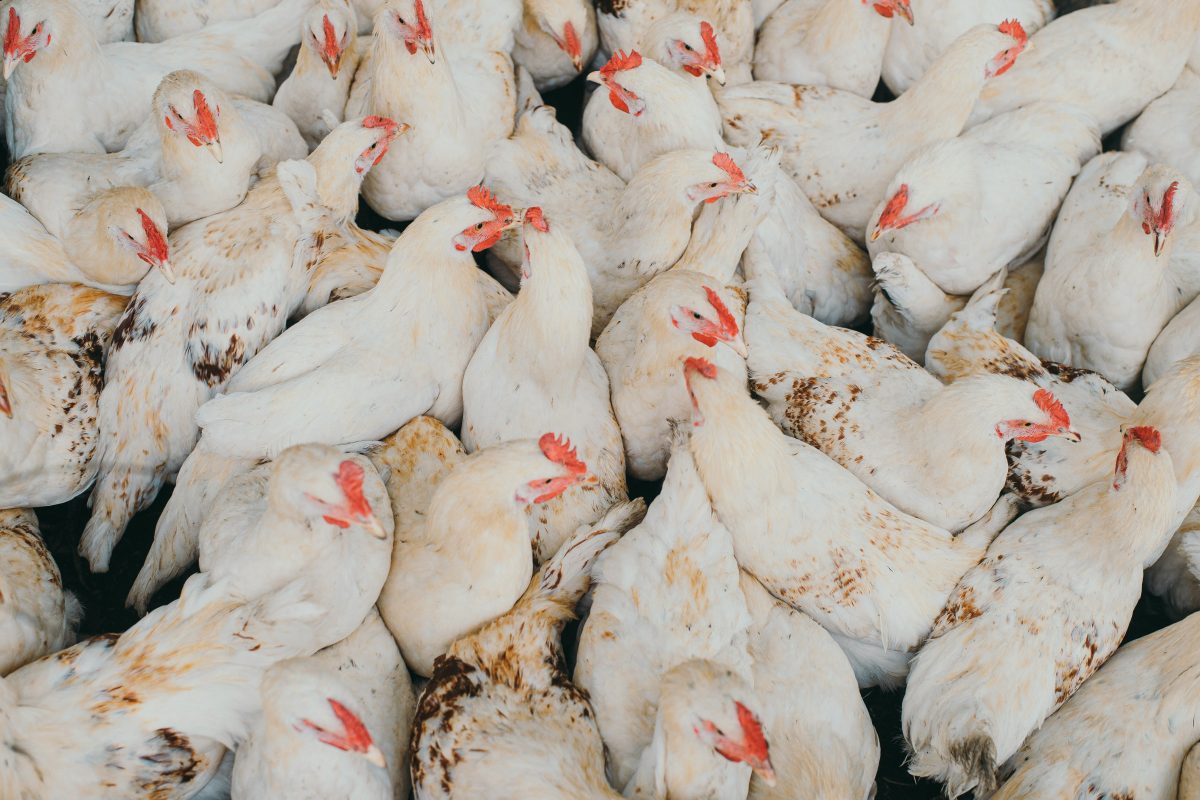 ©Egor Myznik via Unsplash
Every year, billions of chickens are raised around the world only to end up on our plates. The vast majority of these animals spend their short lives on intensive farms, in inhumane conditions. In Europe, broilers are bred to reach slaughter weight in less than 40 days, a growth rate so artificial and accelerated that it causes serious heart, bone, respiratory and motor problems.
This is neither science fiction nor alarmism: all this is well documented by various studies and surveys on animal welfare. European directives stipulate certain minimum standards - adequate ventilation, dry litter, regular inspections, veterinary care - but in practice, raising chickens at an industrial rate is still the norm in most parts of the continent.
Norway's turnaround
Among the European countries that are trying to do things differently is Norway, where an important turning point was announced this year, albeit from the industry itself rather than a binding national law. This year, the main players in the Norwegian poultry industry, including cooperative giant Nortura SA and the trade association KLF, signed a joint declaration committing the sector to achieving two specific objectives by December 31, 2027.
The first is to adopt "in-ovo sexing" on a large scale, i.e. determining the sex of the embryo directly in the egg, in order to avoid the still widespread practice of slaughtering male chicks as soon as they are born, as they are deemed "useless" for egg production.
The second aims to gradually replace fast-growing chickens with slower-growing hybrids, less prone to disease and able to move and behave more like chickens raised in non-intensive conditions.
As mentioned above, this is not a state law with formal sanctions and obligations, but a voluntary agreement between the main players in the industry, also coordinated with the Animalia research organization. The transition will be gradual, taking into account the availability of new genetic material and the infrastructure needed to breed these new breeds.
Hans Thorn Wittussen, Executive Vice President Raw Materials and member of Nortura SA's Executive Board, said:
"It's important to maintain a generally high level of animal welfare in Norway. Over the years, the Norwegian meat and poultry industry has taken consistent steps to improve animal welfare, and we will continue on this path."
A first step on a long road
For those who follow animal welfare issues, this is a concrete step forward and not another vague promise, but a time-bound commitment signed by those who keep an entire country's poultry industry running. The physiological suffering associated with accelerated growth, which affects hundreds of millions of chickens every day, could be significantly reduced. Above all, it shows that it's possible to raise standards without waiting for a law to be imposed.
International animal rights organizations have described these initiatives as historic steps, highlighting their potential domino effect. If Norway succeeds, other countries and producers could follow suit.
But it's important to remain clear-sighted: Norway has not banned intensive livestock farming, nor has it revolutionized the system. We're talking about a voluntary objective, with a precise timetable and serious players involved, and one that remains within the framework of an industry that raises animals on an industrial scale. However, if the transition is successfully completed by 2027, Norway could become a benchmark for the whole of Europe, proving that improving animal living conditions and maintaining an efficient production model are not incompatible goals.
Source : KLF
(©GreenMe.it 2026/Managing editor : Selma Keshkire - The Press Junction/Picture : Egor Myznik via Unsplash)